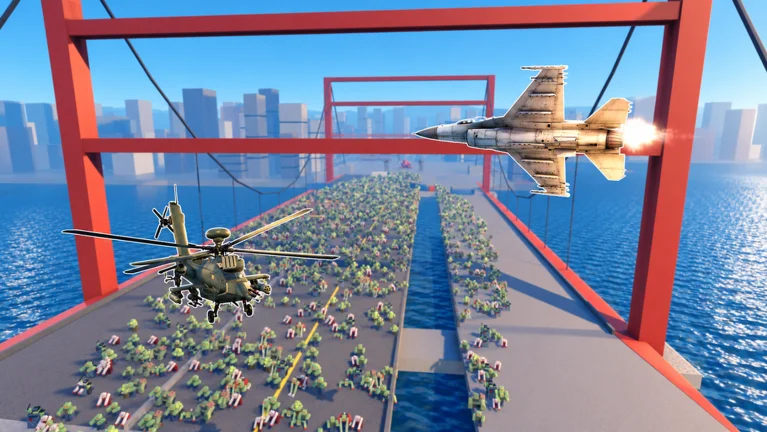
- Zombie Air Force is a co-op PvE shooter on Roblox where you fly aircraft against zombie hordes and giant Behemoths.
- Core loop: survive waves, use rockets and machine guns on clusters, deploy defenses, then spend Credits on upgrades.
- First priority: invest early Credits in primary damage, then survivability, then defenses.
- Biggest rookie mistake: dumping every heavy ability at wave start instead of saving firepower for special enemies.
- Best way to progress: farm the highest mission you can clear consistently rather than pushing too hard.
Zombie Air Force Core Mechanics for New Players
Zombie Air Force, developed by fresh green beans and released on Roblox in September 2026, puts you in the cockpit of an attack aircraft defending a frontline against escalating zombie waves. Missions are wave-based: you clear groups, protect objectives, push the frontline forward, and occasionally face enormous Behemoth bosses that demand coordinated focus fire. Understanding how these systems interact is the difference between surviving five waves and clearing a mission.
The game is currently in Alpha, which means balance, upgrade trees, and mission structure can shift between updates. Build your habits around fundamentals—target priority, positioning, and resource discipline—rather than memorizing exact numbers.
Aerial Combat
- Fly attack runs against zombie clusters
- Rockets for dense groups
- Machine guns for sustained damage
- Air strikes for emergencies
Frontline Defense
- Deploy defensive structures
- Cover key approach routes
- Reinforce weak lanes between waves
- Protect high-value objectives
Progression
- 180+ upgrades available
- Credits earned per mission
- Damage first, survivability second
- Specialize late game
Do not treat your aircraft as a stationary turret. Keep moving, keep an escape route open, and aim attacks where zombies bunch up—one good area strike on a cluster beats five scattered shots.
Step-by-Step: Your First Sessions
Follow this sequence in your first few hours. Each step builds a habit that carries into harder missions.
Understand the Battle Objective
Enter a mission, watch the wave indicator, and identify the main attack direction. Prioritize any threat that can reach or damage the defended area before chasing distant kills.
Use Aerial Attacks Efficiently
Aim at clustered enemies. Save rockets and air strikes for dense waves or high-threat targets, and always keep enough attack capacity in reserve for the next wave.
Deploy and Protect Defenses
Place defensive structures near important approach routes and high-value objectives. Between waves, reinforce whichever lane looks thinnest before pressure arrives.
Collect Resources and Upgrade
Spend mission rewards on reliable damage improvements first. Add survival tools as missions get longer, and keep a reserve for major progression unlocks.
Play Cooperatively
Divide responsibilities in co-op: separate players across zones, combine focus fire on elite enemies, and share responsibility for defense and wave control.
Never commit every heavy ability the moment a wave spawns. Special enemies and Behemoths often arrive mid-wave, and a team with no reserve firepower gets overwhelmed exactly when it matters most.
Enemy Threat Levels and Target Priority
Threat priority should be based on immediate danger, not health bars. A weak zombie next to your objective is more urgent than a tanky enemy far away. Use this table to triage every wave.
| Enemy Type | Threat Level | Behavior | Recommended Response |
|---|---|---|---|
| Standard Zombies | Low–Medium | Group pressure at close range | Area damage on clusters, keep moving, clear the nearest path first |
| Special Enemies | Medium–High | Disrupt positioning, shrink safe space | Call the target, focus fire when it threatens objectives, use crowd control |
| Behemoths | Very High | Heavy sustained area pressure | Assign dedicated damage, keep distance, others control remaining adds |
Priority rules that apply in almost every fight:
- Clear enemies that block movement or threaten the objective before dumping damage into durable targets.
- One player should call targets in co-op while the rest maintain crowd control.
- Never let the whole team tunnel-vision a Behemoth while standard zombies surround the objective.
Behemoths have substantially greater durability and can dominate the battlefield if your team loses positioning. Dedicated damage players attack the boss while control and support players protect the team and manage the smaller wave. Preserve escape routes at all times.
Upgrade Priorities for Early Game
The upgrade tree is large—over 180 options—so spending discipline matters more than spending volume. Follow a staged order rather than spreading Credits across every branch.
| Upgrade Area | Priority | Best Stage | Why It Matters |
|---|---|---|---|
| Primary Damage | High | Early game | Reliable damage shortens battles and eases pressure on defenses |
| Area Damage | High | Early–Mid | One attack affecting several targets makes wave missions manageable |
| Survivability | High | Mid game | Longer missions punish offense-only builds |
| Defense Performance | Medium | Mid–Late | More valuable once enemies survive multiple attack cycles |
| Resource Efficiency | Medium | Late game | Strong long-term returns after combat build is stable |
| Build Specialization | Situational | Late game | Commit to a role only after core needs are covered |
Concentrate early Credits on the weapon or role that defines your build. Once your main damage or control tool is effective, invest in survivability to cover its weaknesses. This reaches useful power breakpoints faster than balanced sprinkling.
Beginner milestones checklist:
First Week Goals:
- Clear your first mission without a failed objective
- Unlock a primary damage upgrade
- Survive a wave containing a special enemy
- Complete a co-op mission with role assignments
- Farm a mission reliably three times in a row
Credits Farming and Build Choices
Credits are most valuable when they improve clear speed or survival. Compare reward sources against time and risk, then invest in upgrades that match the content you can complete consistently.
| Source | Efficiency | Recommended Method |
|---|---|---|
| Standard stage completion | Consistent | Repeat the highest stage you clear reliably |
| Wave/survival completion | Higher with defense builds | Use sustained damage and crowd control through later waves |
| Co-op runs | High when coordinated | Assign roles: crowd control, focused damage, defense |
| Repeatable bonuses | Varies | Claim only when they don't slow better runs |
A slightly easier stage with consistent completion outperforms a harder stage with repeated losses. Reliability, not difficulty, drives your Credits per hour.
Pick an early build direction based on your situation:
Solo Progression
- Balanced damage and survivability
- Works vs groups and durable targets
- Flexible for learning stages
Fast Clear
- High-tempo crowd clearing
- Attack speed and area coverage
- Great for short farming runs
Behemoth Damage
- High single-target focus
- Pairs with teammates on crowd control
- Makes boss phases manageable
FAQ
Q: What is the main objective in Zombie Air Force missions?
Each mission tasks you with surviving zombie waves while completing a combat objective, usually protecting a defended area or pushing the frontline forward. Watch the wave indicator, identify the main attack direction, and prioritize threats that can damage your objective.
Q: What should I upgrade first as a beginner?
Invest early Credits in primary damage, then area damage. These shorten battles and reduce pressure on your defenses. Add survivability in the mid game once missions get longer, and leave resource efficiency and specialization upgrades for the late game.
Q: How do I deal with Behemoths?
Assign focused damage players to the Behemoth while the rest of the team controls standard and special enemies. Maintain distance, preserve escape routes, and never let the entire team tunnel on the boss while adds overwhelm the objective.
Q: Is Zombie Air Force solo-friendly or co-op only?
Both work. A balanced solo build with primary damage, an area weapon, and defensive utility handles progression alone. Co-op runs reward coordination—split roles so one player handles groups while another focuses on elite targets for faster and safer clears.