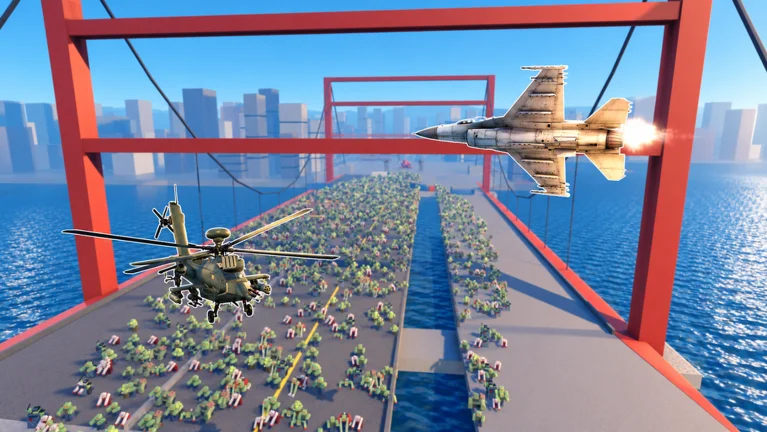
- Zombie Air Force progression runs on damage-first upgrades, then survivability, then efficiency.
- Early Credits belong in primary damage and area attacks to shorten wave battles.
- Mid game demands survivability upgrades before attempting longer missions and Behemoth fights.
- Co-op roles multiply progress speed: split crowd control, focused damage, and defense.
- Farm reliably: clearing a slightly easier stage consistently beats failing a harder one.
Progression Overview: How Advancement Works
In Zombie Air Force, the Roblox co-op zombie air combat experience by fresh green beans, progression is built around a core loop: survive zombie waves from your aircraft, deploy defenses, earn Credits and rewards, then reinvest those resources into 180+ upgrades across your aircraft, weapons, and defensive tools. The frontline only advances when your damage output, survivability, and defense grow together.
The progression system can be broken into three layers:
| Layer | What It Covers | When It Matters |
|---|---|---|
| Combat power | Primary damage, area attacks, target priority | Immediately, from wave one |
| Survivability | Aircraft durability, defensive resilience, escape tools | Mid game, longer missions |
| Efficiency | Reward value, farming speed, build specialization | Late game, repeated runs |
Reliable damage shortens battles and reduces the pressure on your defensive positions. Every wave you clear faster is less time your defenses and teammates spend under threat, which means fewer failed missions and steadier Credit income.
Because the game is in Alpha, expect the upgrade tree to shift with updates. Re-check your route whenever balance changes alter damage values, costs, or defensive performance.
Step-by-Step Progression Route
Follow this route to build a stable foundation before specializing. Each stage prepares the resources needed for the next.
Establish Reliable Damage
Spend your first Credits on primary damage upgrades for your main weapon and aerial attacks. Focus on attacks you use every wave, not situational tools. Goal: clear standard zombie waves without relying on defenses.
Add Area Coverage
Invest in attacks that hit multiple zombies at once. Wave-based missions become far more manageable when one strike affects a dense group, and this directly improves your frontline push speed.
Secure Survivability
Before attempting longer missions or higher difficulties, upgrade aircraft durability and defensive resilience. Builds that invest only in offense get punished by stronger waves and Behemoth pressure.
Strengthen Defenses
Upgrade defensive deployment and lane control near key objectives. This becomes valuable when enemies start surviving multiple attack cycles and reach your defensive line.
Specialize Your Build
Once core damage and survival requirements are covered, commit to a playstyle: fast clearing, co-op defense, or Behemoth damage. Specialized builds outperform generalist setups late game.
Do not spread early Credits across every upgrade branch at once. Concentrate on one primary role first to reach useful power breakpoints faster, then cover its weaknesses.
Upgrade Priorities and Timing
This table ranks each upgrade area by priority and the stage where it delivers the best return:
| Upgrade Area | Priority | Best Stage | Focus |
|---|---|---|---|
| Primary damage | High | Early game | Regular attacks and aerial damage against standard waves |
| Area damage | High | Early to mid game | Multi-target hits and control of dense groups |
| Survivability | High | Mid game | Durability and tools that prevent failed missions |
| Defense performance | Medium | Mid to late game | Deployment strength, lane control, objective protection |
| Resource efficiency | Medium | Late game | Reward value, farming speed, sustained returns |
| Build specialization | Situational | Late game | Committed aircraft, weapon, and co-op role combos |
Aggressive Route
- Damage and area first
- Fastest wave clears
- Riskier on long missions
Balanced Route
- Damage then survivability
- Reliable across mission types
- Recommended for most players
Economy Route
- Efficiency upgrades early
- Stronger long-term farming
- Slower early progression
The balanced route fits most players: primary damage, area damage, survivability, defenses, then efficiency. It reduces the risk of losing long missions while keeping clear speed competitive.
Credits Farming and Spending
Credits are the currency that drives every upgrade decision. Match your farming method to your build strength and spend where it compounds.
| Source | Efficiency | Recommended Method | Best Use |
|---|---|---|---|
| Standard stage completion | Consistent | Repeat the highest stage you clear reliably | Early upgrades |
| Wave and survival runs | Higher with defensive builds | Sustained damage plus crowd control | Mid and late-game funding |
| Co-op runs | High when coordinated | Assign clear roles instead of duplicating builds | Expensive upgrades |
| Repeatable bonuses | Varies | Claim when they don't slow profitable runs | Small upgrade gaps |
The most useful farming route is the highest repeatable activity that does not produce frequent failures. A slightly easier stage with consistent completion can outperform a harder stage with repeated losses in Credits per hour.
When spending, concentrate investment on the weapon or role that defines your build. Upgrade the main damage source first, then add area control or survivability according to the stage you are pushing.
Behemoth Fights and Team Progression
Giant Behemoths are the progression gates of Zombie Air Force. They demand coordinated damage, target priority, and defensive play rather than raw offense alone.
| Enemy Type | Threat Level | Recommended Response |
|---|---|---|
| Standard zombies | Low to medium | Area damage on groups, keep moving |
| Special enemies | Medium to high | Identify early, focus fire when threatening |
| Behemoths | Very high | Dedicated focused damage, maintain distance, control adds |
Key team principles for faster co-op progression:
- Separate roles: one player handles groups while another focuses on special enemies and Behemoths.
- Keep an escape route open: reposition before the area gets crowded so movement stays available.
- Hold resources back: avoid spending every powerful ability the moment a wave begins; keep enough for Behemoth phases and sudden pressure surges.
- Watch the frontline: clear enemies that block movement before dumping damage into durable targets.
Do not let the whole team tunnel on the Behemoth while standard and special enemies overwhelm your defenses. Dedicated damage players attack the boss; control players manage the wave.
Progression Milestones:
- Clear standard waves without defensive support
- Unlock core area damage upgrades
- Complete a full survival mission without failing
- Contribute focused damage in a Behemoth encounter
- Specialize a late-game build for your co-op role
FAQ
Q: What is the best first upgrade in Zombie Air Force?
Invest early Credits in primary damage for your main weapon and aerial attacks. Reliable damage shortens battles, reduces pressure on defenses, and accelerates every later upgrade by improving your clear speed and Credit income.
Q: How does the progression guide change for co-op play?
In co-op, split roles instead of duplicating builds: one player handles crowd control with area damage, another focuses on special enemies and Behemoths, and others reinforce defenses. Coordinated teams progress significantly faster than solo-style groups.
Q: When should I start fighting Behemoths?
Attempt Behemoth encounters after your build covers both focused damage and basic survivability. Behemoths apply heavy sustained pressure, so maintain distance, preserve escape routes, and keep crowd control active while damage players focus the boss.
Q: Is it better to farm a harder stage or an easier one?
Farm the highest stage you can clear reliably without frequent failures. A slightly easier stage completed consistently usually earns more Credits per run than a harder stage with repeated losses.